









Room Clicker
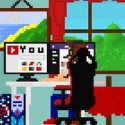
You start Room Clicker in an empty room: bare walls, no furniture, no electronics, just floor space and a cursor you can click anywhere on to start earning cash. Nothing is upgraded, nothing is decorated, and the day-night cycle hasn't even become visible yet - it's just you and a blank room waiting to be filled.
Clicking the Room: The Core Loop of Room Clicker
Room Clicker keeps its opening stretch deliberately basic. You can click anywhere inside the room to earn cash, and there's no limit on how fast you click - the income scales directly with how often you tap, at least until the first upgrades start changing that math. It's a low-friction way into the genre, since there's nothing to learn beyond clicking and spending.
New players tend to spend their first batch of cash on whatever upgrade is cheapest just to see something change, which isn't a bad instinct early on, but it stops working once upgrade costs start climbing exponentially. Each purchase in Room Clicker costs noticeably more than the last, so a player who keeps buying the same cheap item repeatedly instead of spreading cash across different objects usually falls behind.
The appeal for a lot of players isn't the clicking itself but watching the room visually fill in - every purchase is something you can actually see sitting in the room rather than just a number ticking up in a corner, which gives Room Clicker a different feel from clickers that hide all their progress behind menus.
Desks, Sofas, and Electronics: Furnishing Room Clicker
The items on offer in Room Clicker fall into a handful of clear categories rather than one undifferentiated shop list. Electronics let you work up from a basic laptop to a full PC setup and a sizable TV, Comfort items cover chairs and sofas, and Atmosphere pieces like windows and a music system round out the room's feel rather than its income.
Across those categories, the game includes eight core objects to unlock and upgrade, and each one can be improved further once purchased - a plain desk can be swapped for a nicer one at a certain milestone, and the same goes for the chair, the PC, and the rest of the room's eight pieces.
The objects that make up that early-to-mid furnishing stretch are:
- Desk and chair - the first comfort upgrades most players buy
- PC and TV - the electronics tier that scales income the most noticeably
- Windows and music system - atmosphere pieces with smaller income effects
- Cabinet and sofa - later additions that round out the room's furnishing
A typical furnishing order tends to go roughly like this:
- Buy the first desk and chair to move past an empty room
- Upgrade electronics once cash flow from early items stabilizes
- Add atmosphere pieces like windows once the core furniture is in place
- Round out the room with a cabinet and sofa as cash flow allows
Hitting certain milestones also changes how the existing furniture looks rather than just adding new pieces, which is part of why players who stick with Room Clicker long enough describe the room itself as feeling genuinely lived-in rather than like a static backdrop for the upgrade menu.
Does Room Clicker have a day-night cycle?
Yes - as you progress and unlock enough of the room's furniture, a day-night cycle becomes part of the visual presentation, shifting the room's lighting over time rather than keeping it static throughout a session.
How many items can you actually furnish your room with?
Room Clicker is built around eight core objects, including the desk, chair, PC, TV, windows, cabinet, and sofa, each of which can be purchased and then upgraded further once milestones are reached.
Do upgrade costs in Room Clicker stay affordable the longer you play?
No - costs rise exponentially with each purchase, which is why spreading cash across different pieces of furniture tends to work better long-term than repeatedly buying whichever single item is currently cheapest.
Room Clicker never asks for more than clicking and patient reinvestment, but the slow transformation from an empty room into a fully furnished space - desk by desk, sofa by sofa - gives that simple loop a visible sense of progress that a lot of clickers settle for leaving invisible.